


On this page you’ll find a manuscript, background notes and commentary for each section, and a concluding summary and application.
We recommend beginning by downloading the blank manuscript and studying the passage for yourself. Then return here to use the notes and commentary as they serve your reading of Scripture.


¶1: NEW VS. OLD (2:18 – 22)
Background Notes

Weddings were a time of feasting - not fasting.

Weddings were a time of feasting - not fasting.
Helpful background text(s): Isaiah 54:5-6; 62:4-5
For background notes about the Pharisees, see Mark 2:13 – 17.
Fasting in the Bible refers to the voluntary abstention from food for a set period of time. It was practiced as a bodily expression of humility, dependence on God, and urgent seeking of His mercy. In Israel’s Scriptures, fasting is most often associated with repentance, confession of sin, and appeals for divine intervention, especially in times of crisis or impending judgment. The idea is not self-denial for its own sake, but the recognition that one’s need for God outweighs ordinary physical concerns. Fasting was also practiced as an expression of mourning and grief, as well as in situations where wisdom, guidance, or deliverance was sought from God. In the Law, fasting was explicitly required only on the Day of Atonement, described as a day to “deny” or “afflict” oneself (Leviticus 16:29, 31), a phrase commonly understood as a reference to fasting. This fast lasted from sunset to sunset. During and after the exile, additional communal fasts developed to commemorate the destruction of Jerusalem and the temple and other acts of divine judgment (see Zechariah 7–8). By the first century, these fasts may not have been universally observed. Certain religious groups, particularly the Pharisees, were known for regular fasting, sometimes twice a week. Intertestamental literature reflects the belief that fasting could accompany repentance and appeals for divine cleansing (for example, Psalms of Solomon 3:6–8). At the same time, the prophets repeatedly warned that fasting without genuine repentance, justice, and faithfulness was empty and displeasing to God (Isaiah 58:3–7; Jeremiah 14:10–12; Zechariah 7–8).
Weddings in the Jewish world were occasions of joy and celebration, marked by music, feasting, and communal rejoicing. Wedding celebrations often lasted several days, sometimes up to a full week, and marked not only the union of a bride and groom but the formation of a new household within the community. Because of their joyful character, weddings were not appropriate settings for fasting or mourning, as such practices would have contradicted the purpose of the celebration and drawn attention away from the bride and groom. In the Old Testament, weddings appear both as historical events and as theological imagery. The prophets in particular use marriage language to describe the covenant relationship between God and His people, where marriage becomes a metaphor for salvation, restoration, and renewed faithfulness. Jeremiah portrays the coming age of restoration as a time when the voices of the bride and bridegroom are heard again (Jeremiah 33:10–11), while Hosea 2:14–20 and Isaiah 62:4–5 similarly use wedding imagery to describe God’s renewed delight in His people.
Unshrunk cloth refers to fabric that has not yet been washed or processed and therefore has not undergone shrinking. Older cloth, by contrast, has already been washed multiple times and has settled into its final size. Sewing a patch of unshrunk cloth onto an older garment would be impractical, because when the new cloth later shrinks, it would pull away from the already-shrunk fabric, tearing the seam and worsening the damage to the garment.
New wine is wine that has not yet completed the fermentation process. As it ferments, it produces gases and expands. Old wineskins, typically made from animal hides, have already been stretched to their full capacity through previous use and have become dry and rigid over time. If new wine were poured into old wineskins, the pressure from fermentation would cause the brittle skins to split, resulting in the loss of both the wine and the wineskin. For this reason, new wine was placed into new, flexible wineskins that could expand safely during fermentation.
Commentary
¶1: NEW VS. OLD (2:18 – 22)
The Question About Fasting
In the previous scene, Jesus and His disciples were eating with tax collectors and sinners. When questioned, Jesus made His purpose clear: He came to call sinners and to bring healing to those who know they need it. Around the table, He was inviting people near, preaching the coming of God’s kingdom, healing, and forgiving. And He has already demonstrated that the Son of Man has authority to do so.
In contrast, other religious groups—the Pharisees and the disciples of John—were known for fasting. They, too, longed for Israel’s cleansing and God’s redemption. Fasting expressed repentance and grief over sin, and urgent dependence on God. It was a way of crying out for God to act and bring His long-promised redemption and kingdom.
But what they fail to perceive is that the deliverance they seek is already present. The kingdom they are praying for is standing before them. The One who can truly cleanse sin and remove shame is the very One they are questioning.
Jesus is eating with sinners rather than fasting with the religious. Because He and His followers are not fitting expectations, the people come asking why He and His disciples are not fasting. Do they not respect the traditions? Do they not want God’s reign and deliverance?
Jesus responds to this important question with three parables. These are the first of His parables in Mark’s Gospel. Parables are more than a means of illustration; they invite listeners to reconsider reality. They challenge assumptions and call for discernment. Ultimately, they are an invitation to a response.
The Bridegroom Is Present
The first image is a wedding celebration. Everyone knows that fasting and mourning are inappropriate at a wedding feast. As long as the bridegroom is present, it is a time of joy. The idea is clear: there are appropriate times to fast and inappropriate times, and Jesus invites them to see that this is not the time.
It is not coincidence that Jesus uses the image of a bridegroom. Throughout the Old Testament, God is described as the husband of His people. Now Jesus implies that His presence marks the long-awaited moment of restoration.
The kingdom of God is among them, and now the posture of repentance is not abolished but transformed. Rather than expressing repentance through fasting, they are invited to come to the Bridegroom who stands among them. To continue fasting as if nothing has changed is to miss what God is now doing and to fail to respond rightly to the good news.
Yet Jesus adds a surprising twist. The bridegroom will be forcibly “taken away.” There will come a time for fasting—a time marked by loss and sorrow. Even here, early in the Gospel, Jesus hints at His coming rejection and death. A time of sorrow is coming, but in this moment, the proper response to His presence is celebration.
New Wine and New Wineskins
The next two parables broaden the issue. The examples of the cloth and wineskins illustrate the same idea—the destructiveness of trying to combine the old with the new. A patch of unshrunk cloth cannot simply be sewn onto an old garment; it will tear away and make the damage worse. New wine cannot be poured into old wineskins; fermentation will cause both wine and skin to be lost. The problem, of course, is not that the old is evil, but that it cannot contain what is new.
Jesus is doing something fundamentally new among them. He is inaugurating the kingdom of God in their midst. The whole Old Testament pointed God’s people to this great event and prepared them for it. But the time of waiting is over, and the practices shaped by waiting no longer fit the moment. It is a new age that requires new ways of living and relating to God. Trying to bind the old to the new will preserve neither. It will fail to honor what God has done and distort what He is now doing.
Again at the end of these analogies Jesus brings this to its surprising and important conclusion: new wine needs new wineskins. Jesus is inviting the listeners to have new, soft hearts that will respond to His kingdom and His words and be appropriate for this new work of God. They need to be transformed into the new. On its own, an old wineskin cannot become new. But we already know that Jesus is the Son of Man with authority to change hearts and the doctor who can truly heal.
So Jesus gently exposes the deeper issue. This is not ultimately about fasting, but about recognizing the presence of the Bridegroom. The kingdom has come. Will they cling to familiar forms, or will they celebrate and allow themselves to be reshaped by His presence?
¶2: LORD OF THE SABBATH (2:23 – 28)
Background Notes


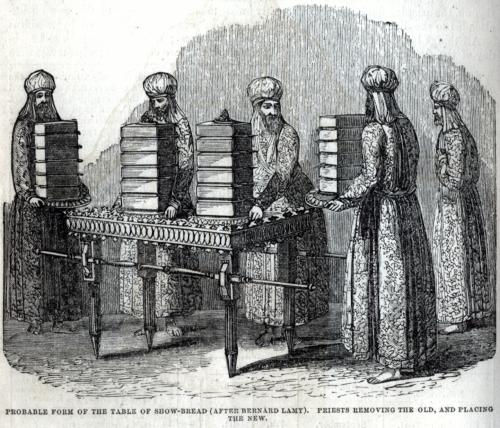
Helpful background text(s): Leviticus 24:5 - 9, 1 Samuel 21:1 - 9
Most agricultural fields in ancient Israel were marked by stones or natural boundaries rather than fences, allowing travelers to pass nearby as they walked along public paths. The Law included provisions for gleaning, requiring farmers to leave portions of their harvest for the poor and the foreigner (Leviticus 19:9–10). In addition, travelers were permitted to pluck heads of grain by hand as they passed through a field, though they were not allowed to harvest with a sickle (Deuteronomy 23:25). Small amounts of grain could be eaten by rubbing the heads between the hands to separate the kernels from the husk, allowing travelers to eat while walking through the fields.
The Sabbath was a central sign of Israel’s covenant with God. At Mount Sinai, God commanded His people to work six days but to rest on the seventh day (Exodus 20:8–11; Deuteronomy 5:12–15). Observed from sundown Friday to sundown Saturday, it commemorated both God’s rest after creation and His redemption of Israel from slavery in Egypt. The Sabbath therefore reminded Israel that God was their Creator, Redeemer, and Provider and functioned as a covenant sign between God and His people (Exodus 31:13–17). Because of its covenant significance, deliberate violation of the Sabbath was treated as a serious offense under the Law. Over time, teachers of the law developed detailed traditions describing what activities counted as work. Later rabbinic writings such as the Mishnah preserve discussions of these traditions and list thirty-nine categories of activities prohibited on the Sabbath. In discussions about Sabbath observance, actions such as plucking grain, rubbing it in the hands, and preparing food could be interpreted by strict teachers as forms of reaping, threshing, or food preparation.
1 Samuel 21:1–6 records the event Jesus refers to in this passage. David, fleeing from Saul, received consecrated bread from the priest Ahimelech. Abiathar was Ahimelech’s son and later became the high priest during David’s reign after escaping Saul’s massacre of the priests (1 Samuel 22:20). Because Abiathar became the priest most closely associated with David’s kingdom, his name could be used to refer to the period of David’s life in which this event occurred. Some scholars also note that Jesus may be referring to the section of the Samuel scroll associated with Abiathar, using his name to identify the portion of Scripture where the story appears.
Leviticus 24:5–9 describes the bread of the Presence. Twelve loaves were placed before the Lord in the tabernacle each Sabbath as a continual offering representing the twelve tribes of Israel. The bread was replaced weekly and, according to the Law, was to be eaten only by the priests in a holy place.
For background on the title “Son of Man,” see the notes on Mark 2:1–12.
Commentary
¶2: LORD OF THE SABBATH (2:23 – 28)
The Question of the Sabbath
This is the fourth controversy between Jesus and the religious leaders in Mark’s Gospel. In this confrontation the central issue is the observance of the Sabbath.
On one Sabbath day, Jesus and the disciples are passing through a field. Rather than eating a Sabbath meal, the hungry disciples follow behind Jesus and eat the simple food God has provided along the fields. A group of Pharisees see this and question the lawfulness of what they are doing. The problem was not the picking of the grain itself. The Mosaic Law allowed travelers to pluck grain from another’s field and eat it. The problem was that this was happening on the Sabbath. According to strict rabbinical interpretations this action could be considered the work of reaping. Since a teacher was responsible for the actions of his disciples, the Pharisees accuse Jesus of allowing the law to be broken.
The Sabbath was a crucial part of the covenant life of Israel and one of the main signs of their relationship with God. As God’s people kept the Sabbath they declared that God ruled among them as their Creator and Provider. On this day of rest and celebration, they ceased from their work to remember who they were and what God had done for them.
The Purpose of the Sabbath
Interestingly, Jesus does not enter into a technical argument about Sabbath laws and what exactly constitutes work. Instead, He opens the Scriptures with His accusers. He reminds them of King David when he was fleeing from Saul. David and the men with him were hungry, and the priest Ahimelech gave them the bread of the Presence to eat. According to the Law, this bread was reserved only for the priests. Yet God did not condemn David, his men, or the priest for this action. The story shows that God cares for the welfare of His people and that the law is meant to bless them, not enslave them.
This argument highlights two different approaches to the Scriptures. The Pharisees tended to read the Law as a system through which holiness could be maintained so that God would bless the people. Jesus, however, presents the Law as a gift from God meant to lead His people into wise and faithful relationship with Him. The Law—including the Sabbath—was meant to bless and instruct, not to lead people into a new form of religious slavery. This is why Jesus says, “The Sabbath was made for man, not man for the Sabbath.” The Sabbath was intended as a gift for God’s people, not a day filled with anxiety about what was allowed.
This understanding of the Law connects with the previous paragraph. Jesus has already shown that His ministry brings something new that cannot simply be contained within the existing traditions and expectations. His teaching about the Sabbath reflects the same reality: the kingdom of God is present and is reshaping how God’s people understand and live out the Law.
The Lord of the Sabbath
But just as in the previous paragraph, Jesus does more than interpret the situation. He uses the moment to teach them what is truly important. In the earlier section He explained why His disciples did not fast and then pointed them to the more important reality: the newness of His ministry. Here He also moves beyond explanation and points to a greater truth: “The Son of Man is Lord even of the Sabbath.” This is the second statement in Mark’s Gospel where Jesus refers to Himself as the Son of Man. In the first (2:10) He claims authority to forgive sins. Now He claims authority over the Sabbath itself. Both are claims of divine authority. More important than detailed Sabbath regulations is the identity of the One standing before them. The Lord of the Sabbath—the One through whom the Sabbath was given—now stands among them. As the Lord of this kingdom, He leads His people into true covenant faithfulness.
There may also be another reason Jesus refers to the story of David. David, the anointed king, depended on God’s provision while fleeing from Saul and carrying out his mission. Those who were with him shared in that provision. In a similar way, Jesus—the greater Anointed King—is on a mission to proclaim God’s kingdom and to free those held captive by evil. God provides for Him and for those who follow Him in this mission. The good news of this passage is that the greater David now stands among His people. The Son of Man, who has authority even over the Sabbath, is leading them into something new and life-giving. And His provision and blessing extend to all who walk with Him.
¶3: HARDNESS OF HEART (3:1 – 6)
Background Notes


Helpful background text(s): Deuteronomy 29:16 - 20, 30:15 - 20
For background on synagogues, see the notes on Mark 1:21–28. Most synagogues were arranged with benches along the walls and open space in the center. Jesus calls the man to stand in this central space where those present could see him.
A withered hand refers to a hand that had become paralyzed or severely weakened, often appearing smaller or shriveled because the muscles and nerves no longer functioned properly. The term “withered” compares the hand to a dried plant or dried-up water source. Such a condition would have been noticeable in public settings, especially during prayer when hands were raised. There was no known medical cure in the ancient world, and serious physical ailments were sometimes interpreted as signs of divine judgment. In the Old Testament, a similar condition appears when the hand of King Jeroboam suddenly withers before being restored (1 Kings 13:4–6).
For background on Sabbath laws and traditions, see the notes on Mark 2:23–28. Jewish teachers generally agreed that actions necessary to preserve life were permitted on the Sabbath. However, many other activities connected with healing were debated. Some traditions discouraged medical treatment or minor cures unless a life was in immediate danger. There was also discussion about whether it was appropriate to pray for healing on the Sabbath. In the Law, deliberate violation of the Sabbath could carry severe penalties (Exodus 31:14; 35:2), though in practice lesser punishments such as fines or beatings were more common.
The Herodians were supporters of the Herodian ruling dynasty, especially Herod Antipas in Galilee. Unlike the Pharisees, they were not primarily a religious group but a political faction concerned with maintaining the rule of the Herodian house under Roman authority. Because popular messianic movements could threaten political stability and provoke Roman intervention, the Herodians would have viewed such movements with suspicion. They likely favored the more Hellenized and politically cooperative culture associated with the Herodian court and would normally have been at odds with the Pharisees.
Commentary
¶3: HARDNESS OF HEART (3:1 – 6)
Watching to Accuse
This final passage in the series of confrontations between Jesus and the religious leaders takes place in the synagogue—the spiritual center of Israel, where Scripture was read and taught, and where these leaders exercised their influence. Yet in this setting, where God’s Word was heard, their condition is now revealed. Whereas earlier they came to hear Him and ask questions, they now watch Him closely, seeking grounds to accuse. Their posture has shifted. They are no longer listening to learn, but looking to condemn.
Among them stands a man with a withered hand. Such a condition would have made it difficult for him to work and participate fully in society. It may even have been viewed by some as a sign of divine judgment (cf. Zech. 11:17). Yet the religious leaders do not respond with compassion or hope for his restoration. Instead, he becomes a means to their end. Their concern is not whether Jesus can heal, but whether He will do so on the Sabbath. In doing so, they overlook the significance of what stands before them. The restoration of such a condition would point to the work of God Himself and signal the presence of His kingdom bringing healing and renewal.
A Question That Reveals the Heart
Jesus is neither trapped nor intimidated. Knowing their thoughts—as He did in the earlier scene with the paralytic—He brings the situation into the open. He calls the man to stand in the center of the synagogue so that all may see what is about to take place. Unlike many healings in Mark that happen privately or at the initiative of those in need, this moment is deliberate and public. Jesus acts openly, choosing to do what is right despite the opposition He knows it will bring.
Using this as an opportunity to teach, He asks a question that exposes the heart of the issue: is it lawful on the Sabbath to do good or to do harm, to save life or to kill? While the leaders have focused on defining the boundaries of what is not permitted, Jesus reframes the question in terms of what ought to be done. The Sabbath, a day set apart for God, is a day for life, restoration, and good. To refuse to do good when it is within one’s power is not neutrality—it is a failure that aligns with harm. The leaders have forgotten that the Law itself was given to lead God’s people into life and blessing (Deut. 30:15).
The question is clear, and the answer is obvious. Yet they remain silent. They refuse to engage, unwilling to reconsider their position or be exposed. In this moment, Mark tells us that Jesus looks at them with anger and is deeply grieved at their hardness of heart. This is the only place in Mark where Jesus’ anger is described so explicitly, and it is meant to be noticed. His anger is not impulsive or self-centered, but directed at their refusal to recognize God’s work and respond to it. At the same time, He is deeply grieved. He does not stand over them in cold judgment, but is troubled by what they have become. His reaction reveals both the seriousness of their condition and His concern for them. Their hearts have become resistant and unresponsive to God. Like Israel in the time of the prophets, they are unable to see and unwilling to hear. Like Pharaoh, whose hardened heart opposed God’s saving work, they now stand against the work of God that brings life.
Healing and Rejection
Jesus, the Lord of the Sabbath, acts. With a word, the man’s hand is restored completely.
A miracle has taken place, yet for the first time Mark records no amazement, no questions, no wonder from those watching. Instead, the Pharisees immediately go out and begin to plot with the Herodians how they might destroy Him. In a striking reversal, those who object to doing good on the Sabbath now plan evil on that very day. Groups that would normally be at odds—the Pharisees and the Herodians—unite in their opposition to Jesus. Their shared hostility proves stronger than their differences.
Jesus restores the withered hand, but the hardened hearts remain unchanged. Though He has authority to heal, those who refuse to recognize their need for a doctor (2:17) do not receive His work and instead turn away to seek His destruction.
Summary & Application

Mark 2:18 – 3:6
Growing opposition
Jesus’ kingdom has come, and wherever He goes it brings life, wholeness, and restoration. In His presence, evil and brokenness are confronted, and people are made whole. In the earlier scenes, Mark has shown us the kinds of people who enter this kingdom—fishermen, tax collectors, and those who know their need.
But not everyone responds in this way.
This section reveals the growing opposition to Jesus and His kingdom. What begins as questions develops into rejection. The tension first appears in the healing of the paralytic (2:1–12), where Jesus’ authority to forgive sins is questioned, and continues as the religious leaders challenge His actions—His association with sinners, His teaching about fasting, and His understanding of the Sabbath.
In each case, Jesus responds by revealing who He is and what His kingdom is like:
the Son of Man with authority to forgive sins
the physician who has come for the sick
the bridegroom, bringing the long-awaited time of joy
the Lord of the Sabbath, who reveals its true purpose
Jesus does not dismiss their questions. He engages them patiently and graciously, inviting them not only to understand, but to repent and believe (1:15). Again and again, He reveals that God’s kingdom has come in Him—bringing mercy, forgiveness, and life—and calling them to respond to who He is.
Yet as the passage progresses, something changes.
The questions do not lead to understanding. Instead, the opposition intensifies:
from questioning in their hearts
to questioning the disciples
to questioning Jesus directly
to watching Him in order to accuse
and finally, to seeking His destruction
This is not a single moment of rejection, but a process of hardening. With each refusal to repent and believe in what Jesus reveals, their hearts grow less open and more resistant. They move from curiosity to hostility, no longer seeking truth at all.
By the final scene in the synagogue (3:1–6), this process reaches its climax. The opposition no longer asks questions but comes to trap and accuse. When Jesus heals the man with the withered hand, there is no amazement—only the decision to destroy Him. Those who objected to doing good on the Sabbath now plan evil on that very day.
At the same time, Jesus’ response reveals something equally important. Throughout these encounters, He has continued to reveal Himself. But in this final scene, no new title is given. Instead, we see His reaction: anger and grief. Their hardness of heart has reached a point where they are no longer listening or responding. It is not that Jesus is unwilling to receive them, but that they are unwilling to come.
The structure of these five accounts (2:1–3:6) reinforces this movement. Together they trace both the revelation of Jesus and the hardening of His opponents.
There is also a chiastic pattern that highlights the center of the passage:
A – Healing of the paralytic (authority to forgive sins)
B – Jesus eats with tax collectors (why does He eat with sinners?)
C – Question about fasting (why do His disciples not fast?)
B’ – Disciples pluck grain (why do they break Sabbath practice?)
A’ – Healing of the withered hand (plot to destroy Him)
The outer stories (A / A’) both involve healing and provoke strong reactions. The inner stories (B / C / B’) revolve around questions of practice—especially eating and the repeated question “why?”. At the center (C), Jesus gives His longest explanation, showing that His coming represents something new. His kingdom cannot simply be added to existing expectations. To receive what He brings requires repentance—a willingness to leave the old and embrace the new work of God in Him. To hold onto the old without responding to Him is to miss what God is doing.
This is the tragedy of the passage. The very practices meant to point people to God—fasting and Sabbath—have become barriers to recognizing Him, because their focus has shifted from seeking God Himself to maintaining the practices themselves. The God they seek is standing before them, yet they do not see Him, because they are unwilling to leave the old and respond to Him.
Jesus warns that failure to receive what He brings leads to loss. By the end of the passage, this warning is already unfolding. Those who refuse to receive Him do not remain neutral—they move toward opposition. The Pharisees, whose hearts have grown hard, now seek His destruction.
This passage therefore reveals both the goodness of Jesus’ kingdom and the danger of resisting it. Jesus graciously invites people to come, to understand, and to find life in Him. But those who repeatedly refuse to respond will find their hearts becoming hardened—like old wineskins, unable to receive what is new.
At the center of it all is one question: Who is Jesus?
If He is the Son of Man, the Bridegroom, and the Lord of the Sabbath, then He must be received and obeyed. If He is not, He should be rejected. But His words, His actions, and His authority all point in the same direction: in Him, the kingdom of God has come.
The invitation remains open—but it will not remain neutral. To ignore Him is to begin the path toward hardness, and to resist Him is to miss the grace and healing He offers. The call is to repent and believe—but when that call is repeatedly refused, the heart becomes unable to respond.
Ideas About Discipleship and Service
Responding to Jesus and His revelation
Throughout this section, Jesus reveals who He is—the Son of Man, the Bridegroom, and the Lord of the Sabbath. Each revelation is not simply information, but an invitation to repent and believe in Him (1:15)—to turn from old ways of thinking and living and to entrust ourselves to Him. Yet the religious leaders question, observe, and evaluate without truly responding. This passage invites us to consider whether we are merely learning about Jesus or actually responding to Him in trust and obedience.
Where might you be hearing Jesus’ words but not yet responding to Him?
What would it look like for you to repent and believe in a specific area of your life right now?
Are there ways you are observing Jesus rather than following Him?
Guarding against the hardening of the heart
This passage shows that hardness of heart is not sudden, but a process. The religious leaders move from curiosity to resistance, and from resistance to opposition, as they repeatedly fail to respond to what Jesus reveals. Over time, their hearts become less open and less responsive. The same danger exists for us. When we ignore, delay, or resist what God is showing us, our hearts can slowly grow hard, making it more difficult to hear and respond to Him.
Are there ways you sense God speaking to you through His Word that you have not responded to?
Where might your heart be becoming less open or less sensitive to Him?
What would it look like to respond quickly and honestly to what God is showing you?
Practicing spiritual disciplines to know God
Fasting and Sabbath were good gifts from God, meant to help His people know Him, depend on Him, and remember His work. Yet in this passage, they had become ends in themselves—markers of spirituality rather than means of relationship. Instead of leading people to God, they had begun to obscure Him. This challenges us to consider how we practice spiritual disciplines today. They are not meant to make us appear spiritual, but to help us seek God, depend on Him, and respond to His presence. When rightly practiced, they soften our hearts and help us remain attentive to Him.
How are you currently practicing spiritual disciplines in your life?
In what ways might these practices be helping—or hindering—your relationship with God?
What rhythms (such as prayer, fasting, rest, or Scripture) might help you seek God more intentionally?
Seeing Jesus for who He is
This passage presents a rich picture of who Jesus is: the Bridegroom who brings joy, the Lord of the Sabbath who leads His people into true rest, the One who does good and restores life, and the One who patiently reveals Himself even in the face of resistance. He is not distant or harsh, but gracious, purposeful, and life-giving. The question is not only whether we understand these truths, but whether we come to Him as the One we need—trusting His authority, receiving His grace, and allowing Him to lead us.
Which aspect of Jesus’ identity in this passage do you most need to see or trust right now?
Where do you need His restoration, leadership, or grace in your life?
What would it look like for you to come to Him with openness and dependence this week?
Other resources
© 2025 Practical Bible. All rights reserved.