

The God Who Needs Nothing
Updated: 4 days ago
Gratitude and the Heart of True Worship
A written sermon on Psalm 50

I recently came across this quite shocking quote by A. W. Tozer:
“What comes into our minds when we think about God is the most important thing about us.”
At first, that sounds like an overstatement. We tend to believe that what matters most is what we say or do. But Tozer is pointing us toward something deeper. What we believe about God ultimately shapes everything else: our worship, our desires, our fears, and the direction of our lives.
What we believe about God shapes the kind of people we become.
If this is true, then we need to stop regularly and ask what we really believe about Him. It is possible for our understanding of God to be shaped more by the world around us than by what He has revealed to be true. It is also possible to confess true things about God while slowly and unconsciously living as though something else were true altogether.
This is why we need to come back to God’s Word again and again, so that what we believe about Him is shaped by what He has revealed about Himself.
This is the great concern of Psalm 50. Written by Asaph, a worship leader and prophet during the days of David and Solomon, the psalm reveals how possible it is to continue the practices of worship while no longer really knowing God.
At the center of the psalm stands a surprising theme: gratitude. Throughout the psalm, thanksgiving becomes a dividing line between dependence and self-sufficiency, between true worship and false worship, between remembering God and remaking Him in our own image.
Psalm 50 ultimately confronts us with this all-important question: Do we truly know God, or have we slowly begun worshipping a distorted version of Him?
Holding court
As the psalm opens, Asaph wants us to see clearly, and be filled with awe once again, at who God is.
And the God revealed in Psalm 50 is not small:
“The Mighty One, God the LORD, speaks and summons the earth from the rising of the sun to its setting. Out of Zion, the perfection of beauty, God shines forth.” (Psalm 50:1–2)
He is the Mighty One, the creator of heaven and earth. Everything belongs to Him because everything comes from Him. The world exists because God made it, loves it, and upholds it by His power, and He alone knows how it was designed to flourish.
This God is also near and personal. He is the LORD, the covenant God of Israel, who rescued His people from slavery and made a covenant with them at Mount Sinai. He promised to be their God, provider, and protector, to dwell among them and give them life. They, in return, were called to belong to Him: to trust Him, obey Him, and reflect His character among the nations. The covenant carried both promise and warning: life for those who walked in His ways, and judgment for unfaithfulness. Heaven and earth themselves were called as witnesses (Deuteronomy 30:19).
And now, in Psalm 50, that covenant scene returns. God holds court. Heaven and earth are summoned once again as witnesses, and God comes forth from Zion, the place where heaven and earth meet.
“Our God comes; he does not keep silence; before him is a devouring fire, around him a mighty tempest.” (Psalm 50:3)
As at Sinai, His coming is marked by fire and storm, beautiful and terrifying. The Mighty One and covenant Lord has come to speak.
At first, we expect the accused to be the nations, the violent and godless peoples who oppose God and practice evil. But the shock of the psalm is that God calls His own people into the courtroom:
“Gather to me my faithful ones, who made a covenant with me by sacrifice!” (Psalm 50:5)
The covenant people stand before the covenant Lord.

And this reveals one more crucial truth about God: He is the righteous judge. He sees rightly because He alone is righteous. Unlike His people, He has remained faithful to His covenant. He has not failed, wandered, or broken His word.
This judgment, though terrifying, is also good news. Things are not as they should be, and God refuses to leave them that way. Because He is both creator and Lord, He not only sees what is wrong; He has the authority and power to set it right.
The courtroom is now set. The judge has taken His seat. The witnesses stand ready. The defendants have been summoned. And now the great question hangs over the psalm: What charge will God bring against His people?
Sacrifice of thanksgiving
The charge God brings against His people is surprising:
“Not for your sacrifices do I rebuke you; your burnt offerings are continually before me.” (Psalm 50:8)
After such a dramatic courtroom scene, we expect the accusation to be something obvious and terrible: idolatry, witchcraft, open rebellion. Instead, God says their sacrifices are not the problem. So what has gone wrong?
Asaph begins by reminding the people who God is. As creator, everything already belongs to Him:
“For every beast of the forest is mine, the cattle on a thousand hills. I know all the birds of the hills, and all that moves in the field is mine.” (Psalm 50:10–11)
God not only owns creation; He knows it. Every bird, every animal, every creature is before Him. Nothing escapes His sight or falls outside His rule and care.
This leads to something important: God is without need.
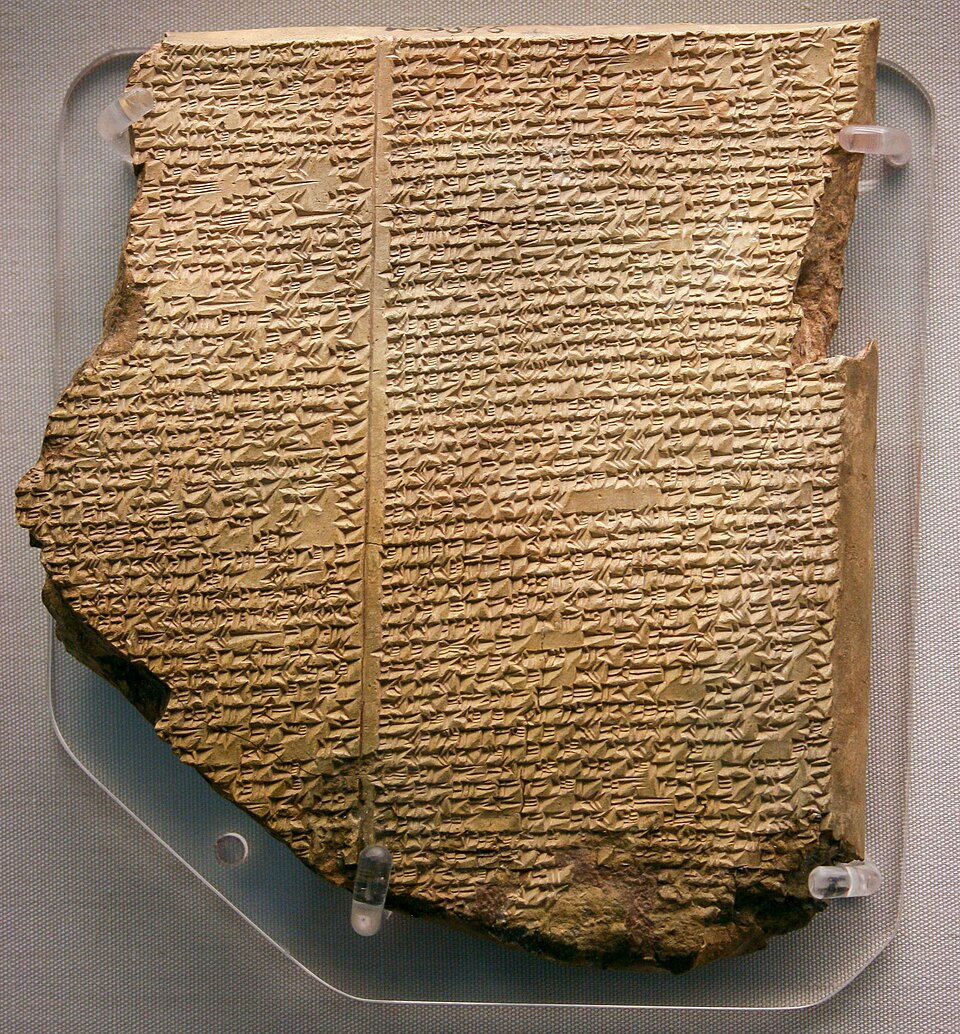
To us, that may sound obvious. But Israel lived among nations whose gods were nothing like this. The gods of Egypt and Mesopotamia were portrayed as needy, unstable, and dependent. They could be manipulated, bribed, or deceived. They fought one another for control and for people’s attention. Many ancient stories imagined humanity existing largely to provide food and labor for the gods. In their temples, the gods had to be put to bed at night, woken in the morning, washed, fed, and clothed.
The Atrahasis flood story from Mesopotamia is almost humorous. The gods send a flood because people have become too noisy. But when the waters go down, the gods realize they are hungry, because there is no one left to feed them. The survivor of the flood comes out of his boat and offers a sacrifice, and the text says the gods “gathered like flies” over it.
But the God of Israel is nothing like the gods of the nations. He does not grow hungry. He cannot be manipulated. He is not weak, anxious, or dependent upon human beings.
“If I were hungry, I would not tell you, for the world and its fullness are mine.” (Psalm 50:12)
And this changes the very meaning of worship. The nations worshipped in order to sustain or appease needy gods. Israel worshipped to remember who God is and to be drawn into trust, dependence, fellowship, and thanksgiving. Their worship was never meant to sustain God, who needs nothing.
And yet, somewhere along the way, Israel had begun to forget this. They slowly absorbed the assumptions of the nations around them and began relating to Yahweh as though He were just another needy god. They believed they were meeting God’s needs so that He, in return, would bless them.
But through Asaph, God tells them they have misunderstood worship completely. The sacrifices were never ultimately for God. They were for the people.
Read carefully, the sacrificial system shows that the altar functions almost like a table. Everything came from God, and fellowship with Him was the goal of worship.
The offerings moved in stages, normally one after the other, at the entrance to the temple. First came the purification offering. Its blood was a picture that sin brings death, and that God was willing to make His people clean. Next came the ascension offering, or burnt offering. The whole animal was burned, and its smoke rose to heaven, a picture of a people made holy and belonging completely to God. But these first two were preparation for the main sacrifice: the peace offering. One kind of peace offering was the thanksgiving offering (Leviticus 7:11–15), the very sacrifice Psalm 50 calls for. Part of it was burned on the altar, and the rest was given back to the worshipper to eat. Made clean and holy, God’s people now sat at His table in fellowship and peace.

They were to come to this meal with thanksgiving, knowing that what they had received was not earned but a gift. The sacrifices were reminders that the people needed God for everything: for forgiveness, cleansing, life, provision, salvation, and fellowship.
But Israel had forgotten the meaning beneath the rituals. Worship had become performance. Thanksgiving had become duty. They thought God was in trouble, they would come to His rescue, and they would be honored for it. In fact, the whole point of the offerings was to remind them that they were in trouble, that they could call upon the faithful God, and that He would deliver them. So God calls them back to the meal’s true meaning:
“Offer to God a sacrifice of thanksgiving, and perform your vows to the Most High, and call upon me in the day of trouble; I will deliver you, and you shall glorify me.” (Psalm 50:14–15)
Why Gratitude Matters
God does not command thanksgiving because He is insecure or needy. He does not need praise in order to feel complete. He calls His people to thanksgiving because gratitude trains them to live in reality.
Thankfulness reminds them who God is: faithful, generous, sovereign, and good. It reminds them who they are: dependent creatures in need of mercy and help. And it reminds them what kind of world they live in: one held together by the God who reigns over all things.
Gratitude forms people who trust God. It teaches them to live with joy rather than fear, with generosity rather than grasping, with hope rather than anxiety.
This is why ingratitude is so serious. To stop approaching God with thanksgiving is the beginning of idolatry. Ingratitude forgets who God is. It reshapes Him into a god of transaction, a needy god we manage and use for our own purposes. But that god is not the living God at all.
If we are honest, we are not so different. We may not believe God needs food or sacrifices, but we often live as though God depends upon us.
God doesn’t need you to have a quiet time. He doesn’t need you to sing in worship or to lead the children’s group. He doesn’t need your money. He doesn’t need you to serve or to share your faith. He doesn’t even need your thanksgiving. A god who needs these things is an idol, and a weak one.
He invites us into these things because they are good for us. Worship and thanksgiving bring us back to reality.
The same is true of service. If we serve thinking we are doing God a favor, we will expect to be paid, and we will expect to be able to manipulate Him. If we serve knowing it is good for us, we will expect to meet Him there, to learn from Him, and to be changed. The best discipleship school is the life of ministry.
God doesn’t need our money either. Everything already belongs to Him. He invites us to give because He knows that where our treasure is, there our heart will be also (Matthew 6:21). Giving teaches us to trust His provision and to remember that all we have is a gift.
A manufacturer doesn’t need us to follow the instructions. The instructions are for us, to show us how the thing works best. God’s instructions, His invitation to serve, and His call to thankfulness are like that.
Living with thanksgiving doesn’t mean we have to be happy about everything. We can come to God in thanksgiving, knowing that He is faithful, good, and in control, and still ask for help or wonder why things are the way they are. Nor do we have to wait for the feelings. Thanksgiving begins as a choice to remember who God is, and the feelings follow. Sometimes the most honest prayer is, “I am thankful; help me in my unthankfulness.”
Worship That Forgets God
The psalm now turns to the kinds of sins we might have expected from the beginning. God addresses “the wicked” among His people: those who steal, commit adultery, slander, and deceive. They hate His discipline and have cast His words behind them.
It is striking how much of this charge is about the tongue:
“You give your mouth free rein for evil, and your tongue frames deceit. You sit and speak against your brother; you slander your own mother’s son.” (Psalm 50:19–20)
God sets our words alongside theft and adultery, because words have just as much power to damage relationships. I find this convicting. I know how careless I can be with my tongue.
But as the accusations unfold, it becomes clear that something deeper lies underneath them all:
“These things you have done, and I have been silent; you thought that I was one like yourself.” (Psalm 50:21)
They have begun to think that God is like them: fickle, changeable, easily manipulated, unconcerned with holiness. Because judgment had not yet come, they assumed God either approved of their lives or did not care. But God’s silence was never indifference. He had already revealed His character, His covenant, and His ways. His people had stopped listening.
And this exposes something important: worship and life cannot be separated.
The people believed that because they still brought sacrifices, they could live however they wanted. But God cannot be manipulated. He will not accept worship while His people continue to reject His ways.

We can make the same mistake. We have been brought into a new covenant through the sacrifice of Jesus. But we can begin to think that because we prayed a prayer, were baptized, serve, tithe, and come to church on Sunday, we are free to live however we like on Monday. God the creator, king, and judge still sees how we live. He calls us back to love Him with all our hearts and to love our neighbor as ourselves, because that is the best life for us, and it is how the world comes to know Him.
So the two accusations in Psalm 50 are not really separate at all. The first accusation was a lack of thanksgiving. The second is sinful living. But underneath both lies the same problem: the people no longer see God rightly.
Ingratitude forgets God’s faithfulness, His provision, His authority, and His goodness. And once people no longer live in thankful dependence upon God, they naturally begin to trust themselves instead. This is why ingratitude so often leads to idolatry and sin. A heart that no longer trusts God will eventually begin to reject His wisdom and cast His words aside.
I first began to see this connection while preparing to lead a Bible study on Romans 1 for a group of students in Sofia. Paul describes humanity rejecting the creator God even though His power and goodness are clearly seen in creation, and at the center of that rebellion is a striking statement:
“For although they knew God, they did not honor him as God or give thanks to him, but they became futile in their thinking, and their foolish hearts were darkened.” (Romans 1:21)
Instead of gratitude, humanity turned toward idolatry. Paul agrees with Asaph: to live without gratitude toward God is to live in idolatry.
And in judgment, God gave them over to the path they had chosen. His wrath is revealed not only in dramatic punishment, but also in allowing people to walk away from Him and experience the consequences of worshipping false gods.
Because we become like what we worship.
If we worship idols of power, success, image, wealth, or control, those things shape us. We become anxious, proud, greedy, envious, and restless. But when we worship the living God, when we remember His goodness and live in thankful dependence upon Him, we are slowly shaped into people who reflect His character: people of love, truth, mercy, generosity, and faithfulness. (I explore this more fully in We Become Like What We Worship, on Isaiah 6.)
This changes the way we think about sin as well. Before I studied this passage, when I saw sin in my life, I thought the solution was simply to work really hard at it. If I lied, I tried really hard not to lie. If I was angry, I worked at not being angry. There is some merit to that. But Psalm 50 invites us to start further back. Sin is like a big neon sign telling us that we have forgotten who God is. We have stopped living in thankful trust of His goodness and begun looking elsewhere for life, security, or control. If we only try to stop one behavior, another will soon take its place.
Repentance, then, is turning away from sin and also returning to the living God with thanksgiving: remembering His faithfulness, trusting His ways again, and learning once more to live in dependence upon Him.
A Gracious Judge
The psalm ends with both warning and invitation:
“Mark this, then, you who forget God, lest I tear you apart, and there be none to deliver! The one who offers thanksgiving as his sacrifice glorifies me; to one who orders his way rightly I will show the salvation of God!” (Psalm 50:22–23)
The judge has spoken, and His people are guilty. And yet what is striking is the mercy of God even here.
The righteous judge does not immediately destroy His people. Instead, He confronts them in order to call them back. He warns them because He desires their restoration. He gives them time to set their way right. Judgment comes as a gracious invitation to repent, to remember the truth, and to return again to covenant fellowship with Him.
Because the alternative is destruction. To continue in ingratitude and false worship is ultimately to walk away from the source of life itself. But to return to God in thanksgiving is to rediscover what they were made for: trust, fellowship, worship, and joyful dependence upon the God who dwells among His people.
This remains true for us today. Through Christ, we have become God’s covenant people. In Him every sacrifice is fulfilled: His blood makes us clean, His death makes us holy, and through His resurrection we are welcomed to God’s table. The church itself has become His temple, a people through whom His presence and salvation are made known in the world.
And so the only response that makes sense is gratitude.

Not occasional thankfulness, but a life shaped by continual remembrance of who God is and what He has done. Gratitude trains our hearts to trust God and to resist the constant pull toward idolatry and self-sufficiency.
This kind of gratitude does not happen accidentally. Like all worship, it is something we learn and practice over time. Here are a few practices that can help us order our way rightly:
Stop and remember: pray the examen at the end of the day, keep a thanksgiving diary, or simply pause a few times a day to thank God.
Celebrate: hold thanksgiving parties. Worship and celebrate together what God has done.
Share testimonies: tell one another the stories of God’s faithfulness.
Treat critique and joylessness as an invitation: when you notice yourself complaining, joyless, or falling into sin, take it as a sign to stop and remember God.
Live simply: don’t make life about getting more things. Learn to be thankful for what you have, and “seek first the kingdom of God and his righteousness” (Matthew 6:33).
Unplug regularly: media has a way of making us fearful, discontented, and convinced that we deserve more. Be careful which voices you listen to, and look to what God has said about Himself.
Just imagine what a testimony this is to the watching world. Our gratitude tells people that our God is great, generous, and faithful. Our ingratitude undermines that testimony and makes Him look small and needy, like the gods of the nations.
My prayer is that we would become people marked by thanksgiving. That others would encounter in us a deep awareness of God’s goodness and faithfulness. That our lives, our worship, and our communities would quietly proclaim that God is great because we are a grateful people.
“The one who offers thanksgiving as his sacrifice glorifies me.” (Psalm 50:23)
FOR REFLECTION
1. What comes into your mind when you think about God? How does that shape
the way you come to him?
2. God needs nothing from us. Where are you tempted to treat worship, service or
giving as something God needs, or as a transaction?
3. Romans 1 links ingratitude with the slide into sin. When you notice sin in your
life, is your first instinct to try harder to stop it? What might change if you went
back to the root, remembering who God is and depending on him with
thanksgiving?
4. Which practice of thanksgiving will you try this week?


